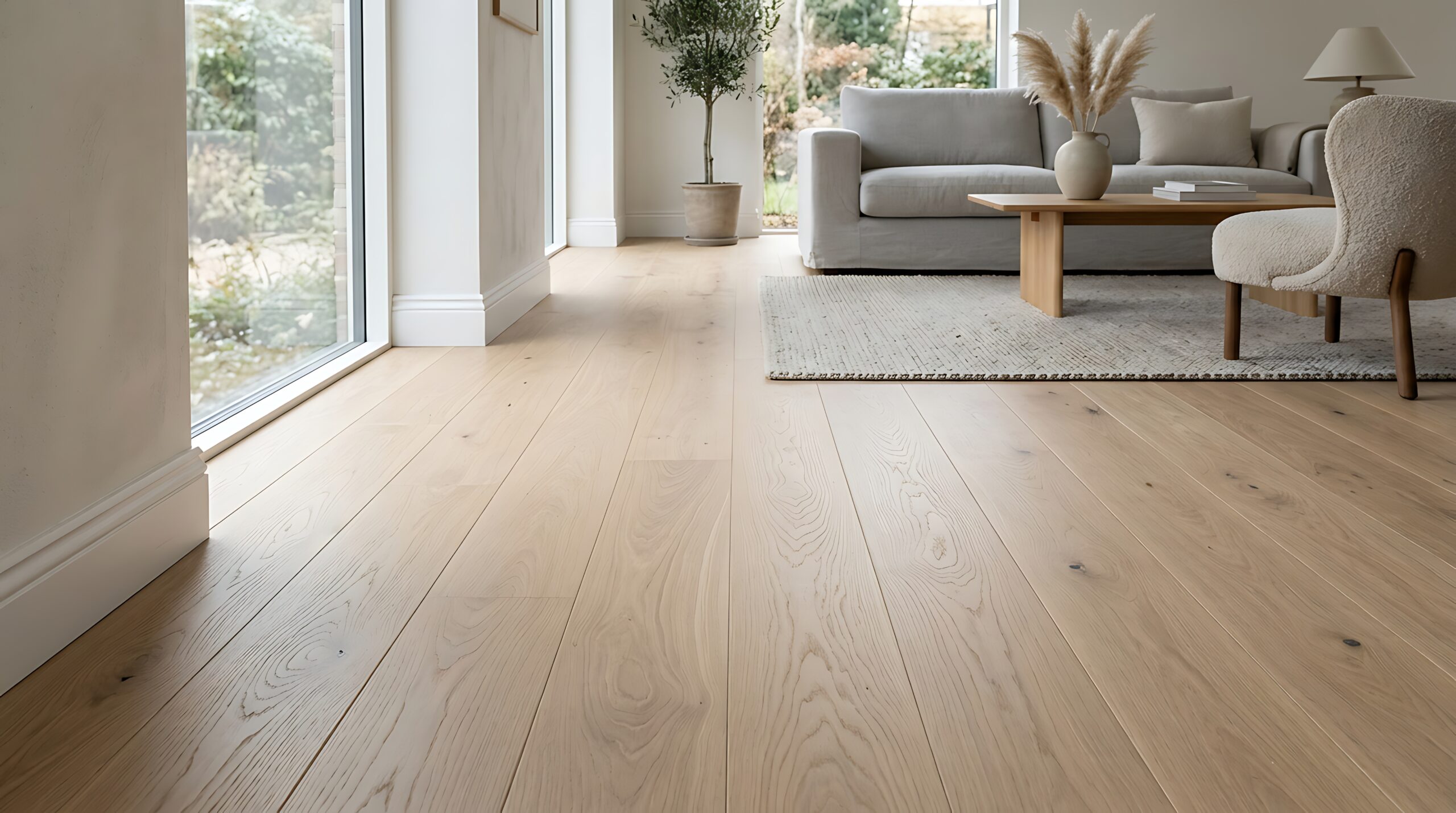
Choosing new flooring can be one of the most exciting parts of updating a home. It can change the look of a room, influence how comfortable it feels and help tie together everything from furniture and cabinetry to paint colors and décor.
But choosing flooring based on appearance alone can be a mistake.
Every room in your home serves a different purpose. The flooring that works beautifully in a quiet bedroom may not be the best choice for a busy entryway. A family room might call for comfort and durability, while a bathroom requires a surface that can handle moisture. And if you have children, pets or a particularly active household, your priorities may change even more.
That doesn’t mean your home has to look like a patchwork of unrelated flooring. Today’s flooring options make it possible to create a cohesive look while selecting materials that make sense for how each space is actually used.
The key is to think room by room.
Here are some of the most important considerations when choosing flooring throughout your home.
Entryways: Start With Durability
Your entryway is the first flooring visitors see, but it is also one of the hardest-working areas of your home.
Shoes bring in dirt, water, leaves and, during an Ohio winter, potentially snow and road salt. Add kids, pets, deliveries and everyday foot traffic, and an entryway floor can see a lot of activity.
Durability and ease of cleaning should therefore be high on your priority list.
Luxury vinyl flooring and tile can both be practical options because they are easy to maintain and available in a wide variety of styles. Depending on the home and household, hardwood can also create a beautiful entrance while establishing a look that continues into nearby living spaces.
Whatever material you choose, think beyond how it looks when it is brand new. Consider how easily you can clean it and how well it fits your household’s everyday routine.
An attractive entryway makes a great first impression. An attractive entryway that is also easy to live with is even better.
Kitchens: Balance Style With Everyday Life
The kitchen is another space where flooring needs to do more than look good.
Between cooking, cleaning, entertaining and everyday family activity, kitchen floors see plenty of foot traffic. Spills are inevitable, and chairs, stools and other furniture may be moved frequently.
For that reason, homeowners often prioritize durability, easy cleaning and moisture resistance when selecting kitchen flooring.
Luxury vinyl is popular because it combines those practical qualities with a wide range of looks. Tile provides another durable option and offers tremendous flexibility in color, pattern and style. Hardwood can create a warm, continuous appearance, particularly in open-concept homes where the kitchen flows directly into a dining or living area.
Comfort is worth considering as well. If you spend a lot of time cooking or entertaining in the kitchen, think about how the flooring feels underfoot in addition to how it performs.
And because kitchens contain so many permanent visual elements, including cabinets, countertops and backsplashes, flooring should work with the entire room rather than competing for attention.
Family Rooms: Think Comfort and Traffic
The family room is often where everyone comes together.
It may be the place where you watch movies, entertain friends, play with the kids or relax at the end of the day. In many homes, it also gets some of the heaviest foot traffic.
That makes the family room an interesting balancing act between comfort, appearance and durability.
Carpet remains a great choice for homeowners who want softness and warmth underfoot. It can also help absorb sound, which can be especially appealing in a busy household.
Hardwood provides a timeless appearance and works particularly well when homeowners want visual continuity between the family room and adjoining spaces. Luxury vinyl can offer a similar sense of continuity while providing an option designed to stand up to active households.
Think about what happens in your family room on an ordinary Tuesday night, not just what you want it to look like when everything is perfectly arranged.
Do children frequently play on the floor? Does the dog spend most evenings there? Do you entertain often? Is it connected directly to the kitchen?
Those answers can help narrow down your choices.
Bedrooms: Put Comfort Higher on the List
Bedrooms typically experience less foot traffic and less exposure to spills and moisture than many other areas of the home. That gives you more freedom to prioritize comfort and personal preference.
Carpet is a natural choice for many bedrooms because of its softness, warmth and ability to create a quieter environment. Stepping onto a soft floor first thing in the morning can be especially appealing during a cold Columbus winter.
Hardwood and luxury vinyl are also popular bedroom choices, particularly for homeowners who prefer hard-surface flooring throughout their home. An area rug can add softness and warmth while preserving the look of the flooring underneath.
Because bedrooms are personal spaces, they also provide an opportunity to make choices based more heavily on individual preference. The flooring in a child’s bedroom, for example, may need to accommodate a very different lifestyle than flooring in a primary bedroom or guest room.
Bathrooms: Moisture Changes the Conversation
Bathrooms present a different set of considerations because water is simply part of the environment.
Wet feet, splashes and humidity mean homeowners should choose flooring specifically suited for areas where moisture is expected.
Tile has long been a popular bathroom flooring choice for precisely this reason. It offers excellent design versatility, with options ranging from classic and understated to bold and contemporary.
Certain luxury vinyl products can also be well suited to bathrooms, offering the appearance of wood or stone along with practical performance characteristics.
This is one area where it is particularly important to understand the specifications of the flooring you are considering rather than assuming that every product within a broad flooring category performs the same way.
A flooring professional can help identify products designed for the conditions found in bathrooms and other moisture-prone spaces.
Dining Rooms: Consider How You Entertain
Dining rooms can range from formal spaces used a few times a year to everyday gathering places that host breakfast, homework and family dinners.
Your flooring should reflect how yours is actually used.
Hardwood can give a dining room a classic, finished appearance and can transition naturally into adjacent living areas. Luxury vinyl can provide a similar visual effect with practical benefits for households where spills and heavy use are common.
Carpet can create a softer, quieter dining environment, although homeowners will naturally want to consider the likelihood of food and drink spills.
If your dining area is part of an open floor plan, continuity may be one of the biggest considerations. Carrying the same flooring through the kitchen, dining and living areas can make the overall space feel larger and more connected.
Basements: Start With the Environment
Basements often serve several different purposes within the same space.
One part may be a family room, another a home office and another a play area, workout space or guest room. Before deciding on flooring, however, it is important to consider the basement environment itself.
Below-grade spaces can have different moisture considerations than the rest of the home, so flooring should be selected with those conditions in mind.
Luxury vinyl is frequently considered for finished basements because of its durability and wide variety of available styles. Carpet can add warmth and comfort to recreation rooms, bedrooms and other living areas when conditions are appropriate. Tile may make sense for other portions of the space.
If you are finishing or updating a basement, this is another situation where professional guidance can be particularly valuable. The best choice depends not only on what you want the room to become, but also on the conditions of the space where the flooring will be installed.
Home Offices: Don’t Forget How You Work
More homeowners now have dedicated spaces for working from home, and flooring can play a surprisingly important role in making those spaces comfortable.
If your office includes a rolling desk chair, consider how easily the chair will move across the flooring and whether repeated movement could affect the surface.
Hardwood and luxury vinyl can make moving around a desk easier, while carpet can create a quieter environment and help absorb sound.
If your home office doubles as a guest room or another living space, think about both functions before making a choice.
The goal is to create a room that feels like part of your home while still supporting the way you use it during the workday.
Hallways: Plan for Plenty of Foot Traffic
Hallways don’t always get much attention during the flooring selection process, but they can be among the most heavily traveled areas of a home.
Everyone passes through them, often multiple times a day.
Durability matters, but hallways are also important visually because they connect different areas of the home. Flooring can help create a natural transition from one space to another.
If several rooms open onto the same hallway, continuing one flooring material through the hall and into some of those spaces can provide a more unified appearance.
When flooring does change, transitions should feel intentional rather than accidental.
Open Floor Plans: Think Beyond Individual Rooms
Choosing flooring room by room doesn’t necessarily mean choosing a different floor for every room.
In fact, sometimes the best room-by-room decision is to use the same flooring across several spaces.
This is especially true with open floor plans. When a kitchen, dining area and family room are visually connected, changing flooring at every boundary can interrupt the flow of the space.
Instead, consider which adjoining rooms have similar flooring needs. A durable hard-surface floor might work beautifully throughout several connected areas, while carpet could begin as you transition into bedrooms or other quieter spaces.
The objective is to balance function with visual continuity.
Pets and Kids Can Change Your Priorities
The people and pets who live in your home should always be part of the flooring decision.
Homes with young children may benefit from flooring that is easy to clean and comfortable for everyday activity. Dog owners may place greater importance on durability, scratch resistance and traction. Busy households may simply want surfaces that don’t require a complicated maintenance routine.
There is no single flooring material that is automatically best for every family.
Instead, consider your household honestly. How much foot traffic does the room receive? How often are spills likely? How much time do people spend on the floor? How much maintenance are you comfortable with?
Those questions can often be more useful than simply asking which flooring is most popular.
Your Floors Should Work Together
Selecting flooring room by room is ultimately about finding the right balance.
Each space has its own requirements, but the entire home should still feel connected. Color, texture and tone can help create that continuity even when flooring materials change.
For example, a wood-look luxury vinyl in one portion of the home can coordinate with cabinetry, furniture or other wood tones elsewhere. Carpet colors can complement adjoining hardwood. Tile can pull colors from surrounding rooms to make transitions feel natural.
This is also where seeing flooring samples together can be extremely helpful. A material that looks beautiful by itself may feel very different when placed next to another floor that will meet it in a doorway or adjoining room.
Find the Right Floor for the Way You Live
Choosing flooring isn’t simply about deciding whether you prefer carpet, hardwood, luxury vinyl or tile.
It is about understanding how your home works.
An entryway has different demands than a bedroom. A busy kitchen has different priorities than a home office. A basement presents different considerations than a family room.
By looking at your home room by room, you can make flooring decisions based on how each space is actually used while still creating a look that feels consistent throughout the house.
And you don’t have to figure it all out on your own.
The flooring professionals at Levi’s 4 Floors can help you compare materials, colors, styles and performance characteristics based on your home, your family and the way you live. With the right planning, you can create a combination of floors that looks great together and makes sense from the front door to the furthest room in the house.

Leave a Reply