Fall has always been a season associated with change. As the weather cools and people begin spending more time indoors, it’s also a natural time to start thinking about changes around the home.
For some homeowners, that means new furniture or a fresh coat of paint. For others, it’s finally tackling a larger project that’s been on the list for months. And few updates can transform the look and feel of a home as dramatically as new flooring.
This fall, flooring trends are continuing to move toward spaces that feel warmer, more natural and more personal. Homeowners still want durability and easy maintenance, but they’re increasingly looking beyond purely practical considerations. They want floors that add character and help create a home that feels comfortable and inviting.
If you’re considering new flooring, here are some of the colors, textures and styles influencing home design right now.
Warm Wood Tones Are Back
For years, gray dominated flooring trends. Gray hardwood, gray luxury vinyl and gray-toned laminate could be found virtually everywhere.
That’s changing.
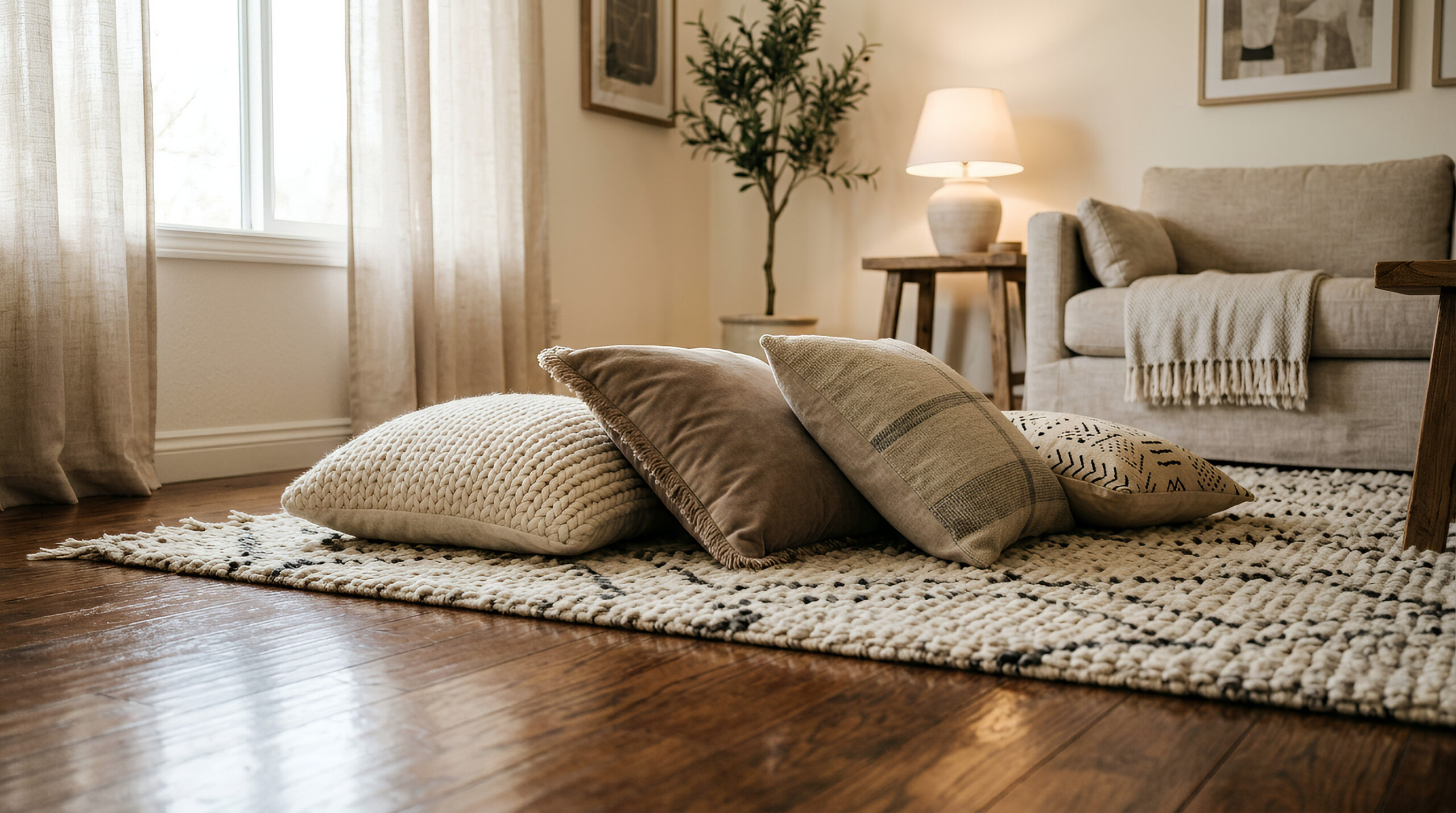
Homeowners are increasingly choosing warmer, more natural-looking wood tones that bring richness and warmth into a room. Honey, caramel, natural oak and medium brown finishes are becoming popular alternatives to the cooler gray palettes of recent years.
One reason is versatility. Natural wood tones work beautifully with many different decorating styles. They can complement a modern space without making it feel cold while also fitting naturally into traditional, transitional and farmhouse-inspired homes.
Warmer floors also pair well with many of today’s popular wall colors, including warm whites, creams, taupes, greens and other nature-inspired shades.
That doesn’t mean every floor needs to be dark or heavily stained. In fact, lighter natural finishes remain popular. The difference is that today’s lighter floors often feature warmth and visible wood character rather than the cool or washed-out appearance that defined many previous trends.
Natural Character Is Taking Center Stage
Perfectly uniform flooring isn’t necessarily the goal anymore.
Many homeowners are embracing the natural variations that give flooring personality.
Wood and wood-look flooring with visible grain patterns, knots and subtle color variation can add visual depth to a room. Rather than trying to make every plank look identical, these floors celebrate the differences between them.
The result is often a space that feels more relaxed and lived-in.
This trend can also be practical. Floors with natural variation and texture may do a better job of visually disguising some of the dust, minor scratches and everyday wear that can be more noticeable on extremely uniform surfaces.
Whether you’re considering genuine hardwood, engineered wood, laminate or luxury vinyl plank, look at the entire flooring sample rather than focusing on a single plank. Variation between planks can be an important part of the finished appearance.
Wider Planks Continue to Make an Impact
Wide-plank flooring continues to be a favorite in many homes.
Using wider planks means fewer seams across the floor, which can create a cleaner, less busy appearance. It can also allow grain patterns and other visual details to become more noticeable.
Wide planks work particularly well in open-concept spaces where flooring stretches across a large area. They can help visually connect kitchens, dining areas and living spaces while creating a consistent foundation for the overall design.
However, plank width is only one part of the equation.
Room dimensions, plank direction, flooring color and the amount of natural light all influence how a finished floor will look. That’s why it’s helpful to view larger flooring samples whenever possible and consider how a particular product will interact with the room itself.
Texture Is Adding Depth
Color gets much of the attention when choosing flooring, but texture can have just as much influence on how a room feels.
Smooth, glossy flooring certainly still has its place, but many homeowners are gravitating toward more tactile finishes.
Brushed, scraped, embossed and matte surfaces can add depth without overwhelming a room. These textures often reinforce the natural appearance of wood-look products by giving the surface additional dimension.
Matte and low-sheen finishes can also create a softer, more understated appearance than highly reflective floors.
Texture isn’t limited to hard surfaces, either.
Carpet is seeing renewed interest in textures that add subtle visual detail. Patterns, loops and variations in pile can make neutral carpet much more interesting while maintaining the comfort people expect underfoot.
Neutral Doesn’t Have to Mean Boring
Neutral flooring remains popular for a good reason: flooring is a significant investment, and most homeowners want something that will work with their home for years.
But neutral doesn’t have to mean plain.
Today’s flooring selections include an enormous range of warm neutrals, layered colors and subtle variations.
Instead of a flat beige carpet, homeowners might choose a textured neutral with multiple tones woven throughout. Instead of a uniform brown floor, they may choose planks with natural variations from lighter tan to deeper brown.
These subtle differences give a floor character while still providing the versatility of a neutral palette.
The key is choosing a floor that creates a strong foundation without dictating every future design decision. Furniture, paint, artwork and accessories are much easier to change than flooring, so versatility can be valuable.
Nature-Inspired Colors Are Moving Indoors
The broader movement toward nature-inspired interior design continues to influence flooring choices.
Warm browns, sandy beiges and earthy neutrals create an easy connection to natural materials such as wood, stone, leather and woven fabrics.
These colors can also pair beautifully with greens, terracotta tones and other colors homeowners are increasingly incorporating into interior spaces.
The goal isn’t necessarily to make a room look rustic. Natural colors can work equally well in contemporary homes.
A clean-lined room with modern furniture, for example, can feel considerably warmer when paired with flooring that incorporates natural wood tones and subtle texture.
Pattern Is Making Carpet Interesting Again
Hard-surface flooring receives plenty of attention, but carpet continues to play an important role in home design, particularly in bedrooms, family rooms and other spaces where comfort is a priority.
One of the more interesting directions in carpet is the use of subtle pattern and texture.
Rather than relying exclusively on solid-color plush carpet, homeowners can choose understated geometric patterns, loops, varying pile heights and tonal designs.
These details can add interest without making carpet the dominant design feature in a room.
Patterned carpet can be especially effective on stairs, where a little additional visual interest can turn a purely functional area into a design feature.
Mixing Flooring Materials Can Feel More Intentional
There was a time when homeowners often tried to use one flooring material throughout as much of the house as possible.
Today, mixing materials can work beautifully when it’s done thoughtfully.
Hardwood or luxury vinyl might flow through the main living areas, while carpet adds softness to bedrooms. Tile may be the right choice for a bathroom, mudroom or another moisture-prone area.
The goal is not necessarily to make every room identical. It’s to make transitions feel intentional.
Choosing flooring materials with complementary undertones can help different surfaces work together. A warm wood floor, for example, may transition more naturally into tile with warm beige or stone tones than into a distinctly cool gray.
Looking at samples side by side can make these relationships much easier to see before installation.
Timeless Still Matters More Than Trendy
Trends can be a great source of inspiration, but flooring is different from many other design choices.
A trendy pillow can easily be replaced next year. Flooring is something you’ll likely live with much longer.
That’s why the best flooring trends are often the ones that complement your personal style rather than completely defining it.
If you love the look of warm natural oak, today’s movement toward warmer floors may help you discover options you hadn’t previously considered. If you prefer carpet, today’s textures and patterns may provide more choices than the basic styles you remember.
But the goal shouldn’t be choosing a floor simply because it’s popular right now.
The goal is finding flooring you’ll still enjoy years from now.
See Flooring in Person Before You Decide
Photos and online inspiration are excellent places to begin, but flooring is one home-design decision that’s particularly important to experience in person.
Colors can appear dramatically different depending on lighting. Texture can be difficult to appreciate on a screen. And a flooring sample that looks one way under showroom lighting may look completely different next to your cabinets, furniture and wall colors.
That’s where working with an experienced flooring professional can make a difference.
At Levi’s 4 Floors, we can help you explore today’s flooring styles while considering the things that matter most in your home, including your lifestyle, budget, existing décor and expectations for durability and maintenance.
Trends may provide the inspiration, but the right floor should ultimately feel right for your home.
And if fall has you thinking about making a change, this might be the perfect time to see what’s new and find a floor that gives your space an entirely new look.

Leave a Reply